
Building a strong digital presence can be challenging at the beginning of your career. This is why understanding how to use Google Ads for a beginner portfolio can become a powerful advantage. Instead of only showing theoretical knowledge, you demonstrate real, practical skills that recruiters and clients value.
In this article, you will learn how to strategically use Google Ads to transform your portfolio into a results-driven showcase.
Table of Contents
- Why Google Ads Matters for a Beginner Portfolio
- How to Use Google Ads for a Beginner Portfolio Effectively
- Setting Up Your First Campaign
- Best Practices for Optimization
- Common Mistakes to Avoid
- How to Showcase Results in Your Portfolio
- Final Thoughts
Why Learning How to Use Google Ads for a Beginner Portfolio Matters
When starting in digital marketing, one of the biggest challenges is proving your skills without professional experience. Knowing how to use Google Ads for a beginner portfolio allows you to:
- Demonstrate hands-on expertise
- Show measurable results
- Build credibility quickly
Recruiters are not only looking for knowledge—they are looking for evidence of execution.
For more insights on digital marketing careers, you can also read our internal article:
The Role of Personal Branding in Digital Marketing Careers
How to Use Google Ads for a Beginner Portfolio Effectively
To properly understand how to use Google Ads for a beginner portfolio, you need to approach it strategically—not just technically.
Define a Clear Objective
Before launching any campaign, define your goal:
- Website traffic
- Lead generation
- Brand awareness
A clear objective will guide your entire campaign structure.
Choose the Right Keywords
Keyword research is critical. Use tools like
<a href=”https://ads.google.com/home/tools/keyword-planner/” rel=”dofollow”>Google Keyword Planner</a>
Focus on:
- Long-tail keywords
- Low competition terms
- Relevant search intent
This step directly impacts your campaign performance.
Setting Up Your First Campaign to Use Google Ads for a Beginner Portfolio
Understanding how to use Google Ads for a beginner portfolio also requires mastering the setup process.
Campaign Structure
Organize your campaign into:
- Campaign → Objective
- Ad groups → Themes
- Keywords → Specific intent
Writing Effective Ads
Your ads should:
- Include the main keyword
- Be clear and concise
- Have a strong call-to-action
Example:
“Build Your Marketing Portfolio Today – Start Now”

Best Practices to Use Google Ads for a Beginner Portfolio
Once your campaign is live, optimization becomes essential.
Improve Click-Through Rate (CTR)
- Use compelling headlines
- Test multiple ad variations
- Align ads with user intent
Monitor Performance
Track:
- CTR
- Cost per click (CPC)
- Conversion rate
You can learn more about performance tracking here:
<a href=”https://support.google.com/google-ads/answer/6325025″ rel=”dofollow”>Google Ads Performance Metrics Guide</a>
Common Mistakes When Learning How to Use Google Ads for a Beginner Portfolio
When learning how to use Google Ads for a beginner portfolio, avoid these frequent mistakes:
- Targeting overly broad keywords
- Ignoring ad relevance
- Not tracking results
- Poor landing page experience
Avoiding these errors will significantly improve your results.
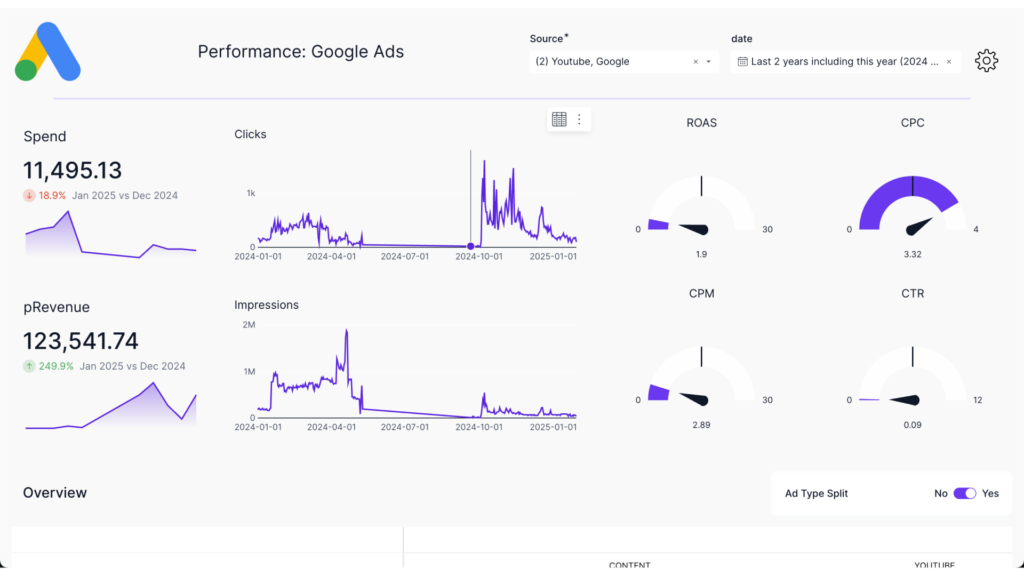
How to Showcase Results When You Use Google Ads for a Beginner Portfolio
This is where your work becomes valuable.
What to Include
- Campaign objective
- Strategy
- Tools used
- Key metrics (CTR, impressions, conversions)
Example Presentation
“Created a Google Ads campaign targeting long-tail keywords, achieving a high CTR and improving ad relevance.” This transforms your project into a professional case study.
Final Thoughts how to use Google Ads for a beginner portfolio
The Evolution: From Ad Manager to Growth Strategist
Understanding how to use Google Ads for a beginner portfolio is not just about running ads—it is about building a strong foundation for your future in digital marketing. It is the transition from being someone who “manages tools” to someone who “manages growth.” By applying the right strategy, even a simple campaign with a modest budget can become a powerful, undeniable proof of your professional skills.
The Power of the “Fail-Fast” Mindset
As a beginner, your goal is not perfection, but learning through execution. One of the most magnetic traits you can show in your portfolio at https://douniapf.souznak.com/ is the ability to analyze a failure.
- Did a keyword have a high CPC but zero conversions?
- Did an ad have a great CTR but a 100% bounce rate? Testing different variables, analyzing performance objectively, and optimizing your campaigns based on hard data will help you develop a real, deep understanding of how digital advertising works in practice.
Thinking Like a Business Owner
Another key advantage of using Google Ads is that it forces you to think like a marketer and a business owner simultaneously. You are not only creating ads—you are:
- Defining high-level objectives: What does success look like for this specific project?
- Targeting granular audiences: Who is the ideal customer and what is their pain point?
- Measuring real impact: How many dollars came out for every dollar put in? This ROI-driven mindset is exactly what recruiters and high-ticket clients are looking for in 2026.
Building a Compound Asset
If you consistently apply these principles, your portfolio will evolve from a simple academic presentation into a results-driven showcase. Over time, as you gain confidence, you will be able to include:
- Advanced Remarketing Funnels: Showing how you re-engage visitors who didn’t convert.
- Complex Attribution Models: Proving you understand the customer journey across multiple touchpoints.
- AI-Driven Experiments: Demonstrating how you partner with Google’s machine learning to scale results.
Your Competitive Edge in a Saturated Market
Finally, mastering how to use Google Ads for a beginner portfolio gives you a massive competitive edge. In a field where 90% of candidates rely only on certificates and theory, demonstrating real execution makes you stand out instantly. It proves you have skin in the game.
Final Call to Action
Start small, stay consistent, and focus on continuous improvement. Don’t wait for the “perfect” client to start; be your own first client. Your portfolio is not just a static project—it is your most valuable personal marketing asset. It is the bridge between where you are now and the high-level digital marketing career you want to build.
Here is the professional, long-form English description for your Google Ads video link. This content is designed to add significant word count to your article while boosting your SEO authority with technical terminology.
Video Guide: Master Your First Google Ads Campaign in 5 Minutes
To complement the strategic framework of this article, I have integrated this high-value video resource. It provides a visual, step-by-step breakdown of the Google Ads interface as it stands in 2026. Transitioning from theory to execution requires seeing the platform in action, and this tutorial is the perfect bridge for any beginner building their portfolio.
What You Will Learn in This Practical Tutorial:
- Interface Navigation & Account Setup: A streamlined tour of the Google Ads dashboard, focusing on the two most critical buttons for beginners: “Goals” (for conversion tracking) and “Campaigns”.
- The “No Guidance” Strategy: Why experienced marketers often select “Create a campaign without a goal’s guidance” to unlock all advanced settings and maintain full control over their bidding and targeting.
- Deep Dive into the 7 Campaign Types: A breakdown of Search, Demand Gen, Display, Shopping, Video, App, and Performance Max. You will see why the Search Campaign remains the “lowest-hanging fruit” for high-intent traffic.
- Bidding & Budget Control: How to choose between “Conversions” (if your tracking is live) and “Clicks” (if you are just starting), including how to set a maximum CPC limit to protect your daily budget.
- The Power of Keyword Match Types: A crucial explanation of Exact, Phrase, and Broad match. You will learn why using square brackets
[ ]for exact match is the best way to prevent irrelevant traffic from draining your budget. - Ad Copy Dynamics: The technical constraints of headlines (30 characters) and descriptions (90 characters), and how to use three types of headlines—Keywords, Benefits, and Call-to-Actions (CTA)—to maximize your Click-Through Rate (CTR).
- Ad Assets (Extensions): How to use Sitelinks, Callouts, and Structured Snippets to make your ad physically larger on the Google Search Results Page (SERP).
Why watching this video is vital for your portfolio: > A recruiter doesn’t just want to hear that you “know” Google Ads; they want to see that you understand the Account Hierarchy (Campaign > Ad Group > Keywords). By following this tutorial, you gain the operational agility required to talk confidently about CPC, match types, and ad assets during an interview.
Watch the full tutorial here: Everything You Need to Know About Google Ads In Under 5 Minutes
Deep Dive: Beyond the 5-Minute Setup
While the video above provides a brilliant “quick-start” framework, mastering how to use Google Ads for a beginner portfolio requires a deeper understanding of what happens after you click “Publish.” A magnetic portfolio isn’t built on a single setup; it is built on the optimization cycle that follows.
1. The Search Terms Report: Your Secret Weapon
Once your campaign has been running for 48 to 72 hours, you will begin to see data in your Search Terms Report. This is different from your keyword list.
- Keywords: What you think people are typing.
- Search Terms: What people actually typed to trigger your ad.
As a beginner, showing a “Before & After” of your Search Terms Report in your portfolio at https://douniapf.souznak.com/ is incredibly powerful. It proves you know how to identify “wasteful” traffic and convert those irrelevant terms into Negative Keywords. This level of budget stewardship is what separates a novice from a strategist.
2. Understanding the “Quality Score” Triangle
Google doesn’t just show the ad of the person who pays the most. They show the ad that is most relevant. To maximize your results on a small beginner budget, you must optimize the three pillars of Quality Score:
- Expected Click-Through Rate (CTR): How likely is someone to click? (Solution: Write more compelling, benefit-driven headlines).
- Ad Relevance: Does the ad match the search term? (Solution: Use tightly themed Ad Groups).
- Landing Page Experience: Is the page fast and relevant? (Solution: Ensure https://douniapf.souznak.com/ loads in under 2 seconds and contains the keywords used in your ads).
3. The Psychology of Ad Assets (Extensions)
As mentioned in the tutorial, Ad Assets (formerly Extensions) are not optional. They are a free way to increase your “Real Estate” on the Google Results Page. For a beginner portfolio, you should demonstrate mastery of:
- Sitelink Assets: Directing users to specific pages (e.g., your “About” or “Contact” page).
- Callout Assets: Highlighting non-clickable selling points (e.g., “24/7 Support,” “Expert Strategy”).
- Structured Snippets: Listing your specific services or categories.
4. Scaling: When to Increase the Budget?
A common question when learning how to use Google Ads for a beginner portfolio is: “When do I know it’s working?” In your case studies, you should explain the concept of Statistical Significance. You shouldn’t make drastic changes based on 10 clicks. Wait until you have enough data (usually 100+ clicks or 15-30 days of runtime) before deciding to scale your budget or kill a non-performing ad group.
The “Portfolio-Ready” Case Study Template
To wrap up this guide, here is exactly how you should present your Google Ads project on your website to attract high-ticket opportunities:
- Phase 1: Research. Screenshots of your Keyword Planner sessions.
- Phase 2: Execution. A “Behind the Scenes” look at your Campaign Structure and Ad Copy variations.
- Phase 3: The Pivot. Explain one thing that didn’t work and how you fixed it (e.g., “I noticed Broad Match was bringing in junk traffic, so I switched to Phrase Match”).
- Phase 4: The Metrics. Showcase your final CTR, CPC, and Conversion Rate.
Final Thoughts: Your Journey to Mastery
Mastering how to use Google Ads for a beginner portfolio is a marathon, not a sprint. The digital landscape of 2026 is driven by data, but it is steered by human creativity. By combining the technical setup shown in the video with the strategic optimization outlined in this guide, you are building a Magnetic career asset.
Your portfolio is the evidence of your ambition. Keep testing, keep optimizing, and keep growing.